
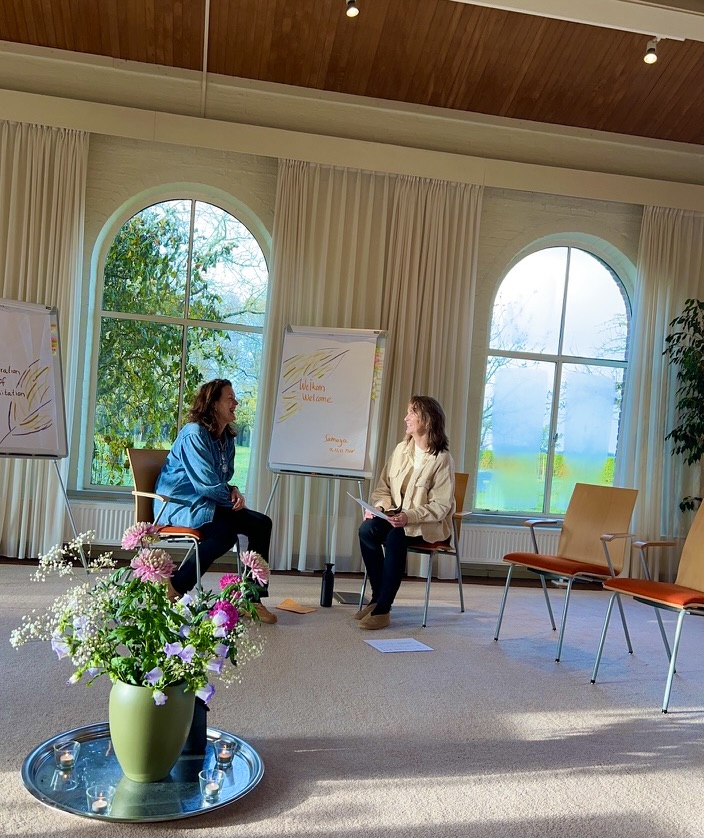
This morning the three of us talked about something we rarely say out loud.
We feel powerless.
We watch intolerance grow. We watch polarisation harden into something uglier. We watch a handful of companies gather more power than many governments, and make decisions that shape how billions of people live, think and talk to each other.
We share being worried. And then we go back to our work. Designing sessions. Preparing workshops. Sitting in a circle with a leadership team.
It's easy to feel that the two have nothing to do with each other.
Where the decisions are made
We come from business. It's where we've spent most of our working lives.
Business shapes the world more than most of us like to admit. What gets built. What gets measured. Who gets heard, and who gets designed out. Whether a river is a resource or a living thing.
Those choices aren't made by "the company." They're made by people. In rooms. Usually under pressure, often tired, sometimes afraid.
And the state of the people in that room shapes what comes out of it.
A team running on fear protects itself. It goes for the safe answer, the fast answer, the answer that keeps this quarter's numbers right. A team that is connected - to each other, to what they actually care about, to the people their decision will touch - makes different choices. Not perfect ones. Better ones.
I've seen that difference many times.
A leadership team had to decide on a restructuring. One member wanted it fast and clear: close the plant. Under time pressure, the other two seemed ready to follow.
But one of them had told me beforehand that there might be another option. Uncertain, and it would take time.
So, as we had agreed, I invited him to speak. You could see him gather the courage. He spoke from how much it touched him: so many lives about to be turned upside down.
They listened. And by really listening to each other, they found another way. The plant was sold to a company that needed the capacity. Better for the people, and in the end better for the business. It was a poignant moment for me, in which I (once again) felt what impact I can have as a facilitator.
What a facilitator actually does
This is where facilitation comes in. Not as a technique. As a way of being in the room.
A facilitator can't make the decision for a team. Shouldn't. But a facilitator can change the conditions in which it gets made.
Slow things down when speed is hiding fear. Make space for the person who has been quiet all morning. Name what everyone feels and nobody says. Ask the question that brings the people outside the room, ‘customers, colleagues, the next generation, the natural world’ back into it.
None of that works as a trick. People feel the difference between a facilitator who performs calm and one who actually is calm. You can only bring into a room what you've found in yourself first.
That's why we spend so much time on what we call being. It's the hardest part to develop, and the part that makes the biggest difference. Inner peace isn't a luxury here. It's what allows you to help others towards a little more peace between them.
A small proposition for a big world
We know how this sounds. The world is this complex, and we're offering… better conversations?
We feel that tension too. Facilitation won't stop extremism or rebalance power on its own. But we don't believe in waiting until someone else fixes the big things either. A lot of what goes right in the world goes right because someone, somewhere, did the small thing well.
For us, the small thing is this: supporting the people who make decisions to make them from the heart rather than from fear. With a bit more love for each other. With more respect for people, and for the planet they're deciding about.
That isn't watching from the sidelines. It's choosing the place we can actually influence.
An invitation
If you facilitate, coach or lead, you're already in those rooms. And you already have a radar. That feeling when the energy drops. When someone gets talked over. When a decision quietly costs someone who isn't there.
In LOF we want to help people fine-tune that radar. And trust it enough to act on it. In our eco-system of facilitators we provide programs, online trainings and inspiration to grow your mastery in facilitating, catering for people taking their first steps in this field or people that are highly experienced and looking for a next step.