
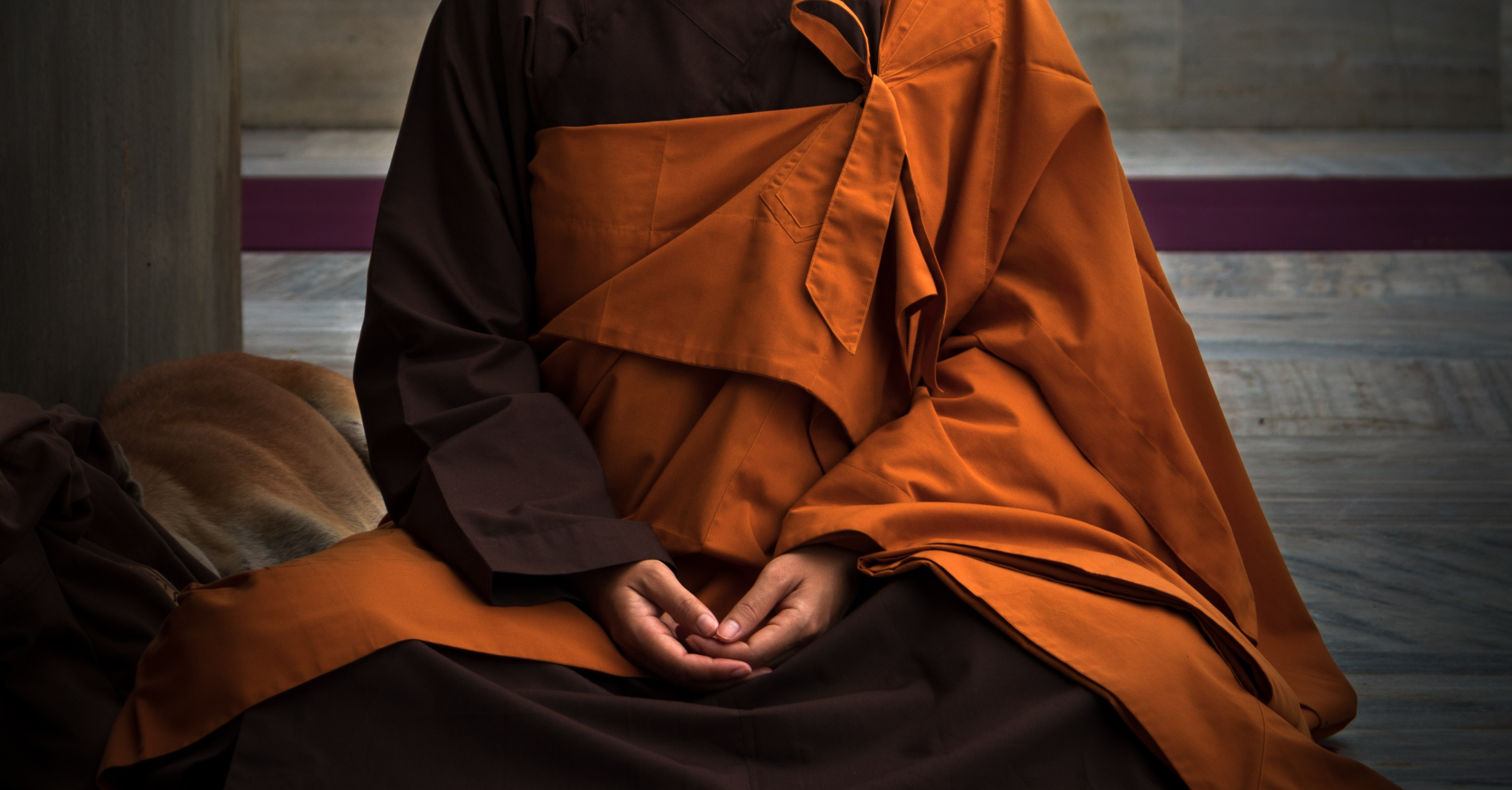
Do you sometimes feel lost in meditation? Overwhelmed by the vast amount of different offerings, methods, and promises? Unclear about the bigger meaning beyond stress reduction? Or are you curious to find out what awakening actually means and how to do so?
In the westernised versions, the foundations of meditation sometimes get lost in translation. This blog brings you back to the roots, based on one of the most widespread and original sources: Tibetan Buddhism. Understanding the foundations of meditation will help you deepen your ''time on the cushion'' whilst at the same time further integrating meditation into your daily life.
As a leadership & team facilitator this practice is one of our strongest fundaments underlying the joy and impact we create with clients. This is why we integrate meditation in the core of our facilitator development program.
The ultimate purpose of meditation (…and why we need it.)
The purpose of meditation is the release of suffering. This suffering springs from deeply ingrained, archetypal beliefs we hold about Life, which causes a reactive pattern that in turn perpetuates this suffering.
There are two default ways we react to reality:
- we crave what we want
- we push away what we don''t want
And on top of that: we are unaware of these reactions, ignorant. In Buddhist philosophy, these 3 are called the triad of clinging, aversion, and ignorance.
We are living in illusions instead of reality
Underlying this reactive pattern and driving our behavior, are archetypal beliefs. Or you could call them illusions, which go against the true nature of reality:
1. Suffering (Dukkha) — we are never satisfied with reality just as it is. We hold the belief that if we get more of this and less of that, then we will be happy.
2. Impermanence (Anitya) — nothing ever lasts. What we have we will lose, yet we hold the belief we can make things last and cling onto it.
3. Non-self (Anatman) — things do not have an inherent meaning or identity of itself. Including the phenomenon we call ''Self''.
Lifting the veil
Once we become aware of the illusions we unconsciously live in, we no longer have to grasp for or resist what shows up in reality. This frees up an enormous amount of energy, space and freedom. It opens the door to a more harmonious, loving relationship with Reality itself.
The process of meditation
The Sanskrit word for ''to meditate'' = ''to become familiar with''. What meditation helps us to do is to become familiar with our own mind so we can understand how it relates to reality.
A. Focus meditation (Shamatha)
The first, most well-known step in meditation is Shamatha, or focus meditation. We stabilize our attention using concentration on a single object, such as breath, body, candles, sounds. This way we become aware of our distractions and train our ability to regain focus.
B. Insight meditation (Vipassana)
The second step is Vipassana or insight meditation. When we are able to stabilize our minds, we let go of the focus on a single object. Instead, we expand our awareness to anything arising in our minds. In ''calm abiding'' we can see our mind as the vast blue sky and all the phenomena such as thoughts, feelings, sensations arising and passing as the clouds in that sky.
Next, in order to activate insight, a very gentle discernment is added by holding a question:
- Does this phenomenon make me happy or suffer?
- Is this phenomenon permanent?
- Who is observing this phenomenon?
Holding these inquiries lightly and with a clear and open awareness, the automated reactions of your mind start naturally pausing and falling away.
Liberate yourself from your illusions
Each time we cling or are being in aversion, we resist reality. This resistance creates blocks of stuck energy in us, called Samskara''s in Buddhist terms. Through consistent meditation practice, these blocks can dissolve, freeing us to live more in harmony with reality as it is.