
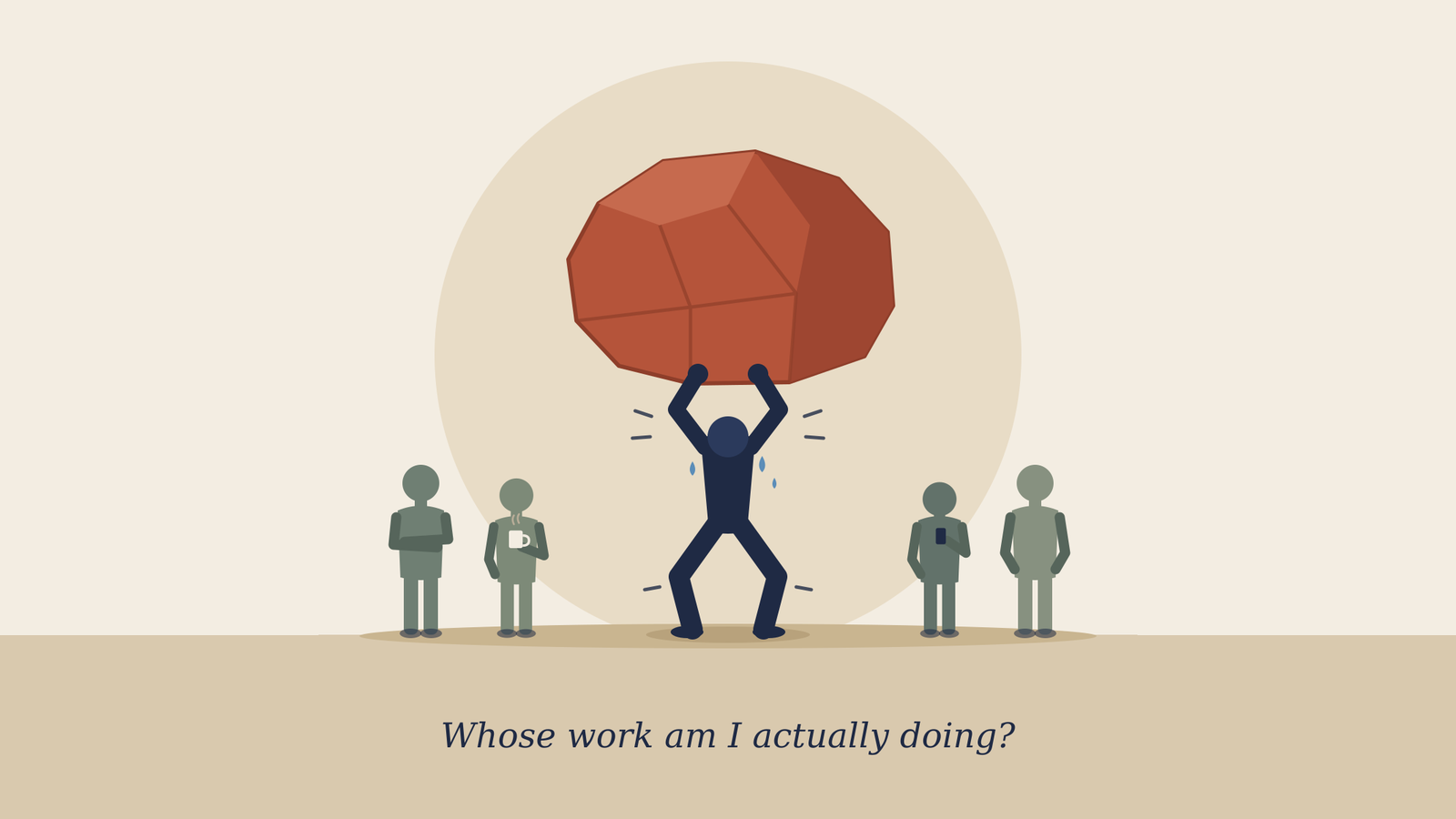
In the beginning of my facilitation career, I would often walk out of a workshop exhausted. I had given so much energy. I had worked so hard. And I thought that was what a good day of facilitation felt like.
Until I started noticing something else. Some workshops, I came out feeling as if I'd spent the full day in meditation. I would feel energized in a calm and content way. Whilst at the same time, those sessions seemed to create more meaning and impact for the group.
That contrast taught me that the exhaustion is a signal. Not that a group was difficult, but that I was doing work that wasn't mine to do. And even more so, that I had probably been in the way of things.
Once I knew what to look for, I could notice it in the room too, not just afterwards. There would be little engagement, people sitting back and listening politely. And me doing all the talking: explaining, summarizing, nudging the conversation towards where I think it should go. That's my cue to pause and ask myself: whose work am I doing right now? And why am I working so hard?
The 'why' is where it gets interesting.
Because it almost always points to a need. So, the real question becomes: whose need am I trying to meet here? Honestly? Mine. My need to achieve. My need for results. If we don't get there, a part of me feels I have failed. So I step in, take control, and work harder.
And here's the paradox: it doesn't help. The real result, the one that lasts, lies with the group. It comes from them thinking, struggling and deciding for themselves. The harder I work, the more of that responsibility I take out of their hands.
So, these days, when I feel myself working too hard, I am happy to notice it. And then instead of unconsciously trying to get my own needs met, I ask what the group needs. Which is usually less of me.
How do you notice when you're working too hard?